Name:
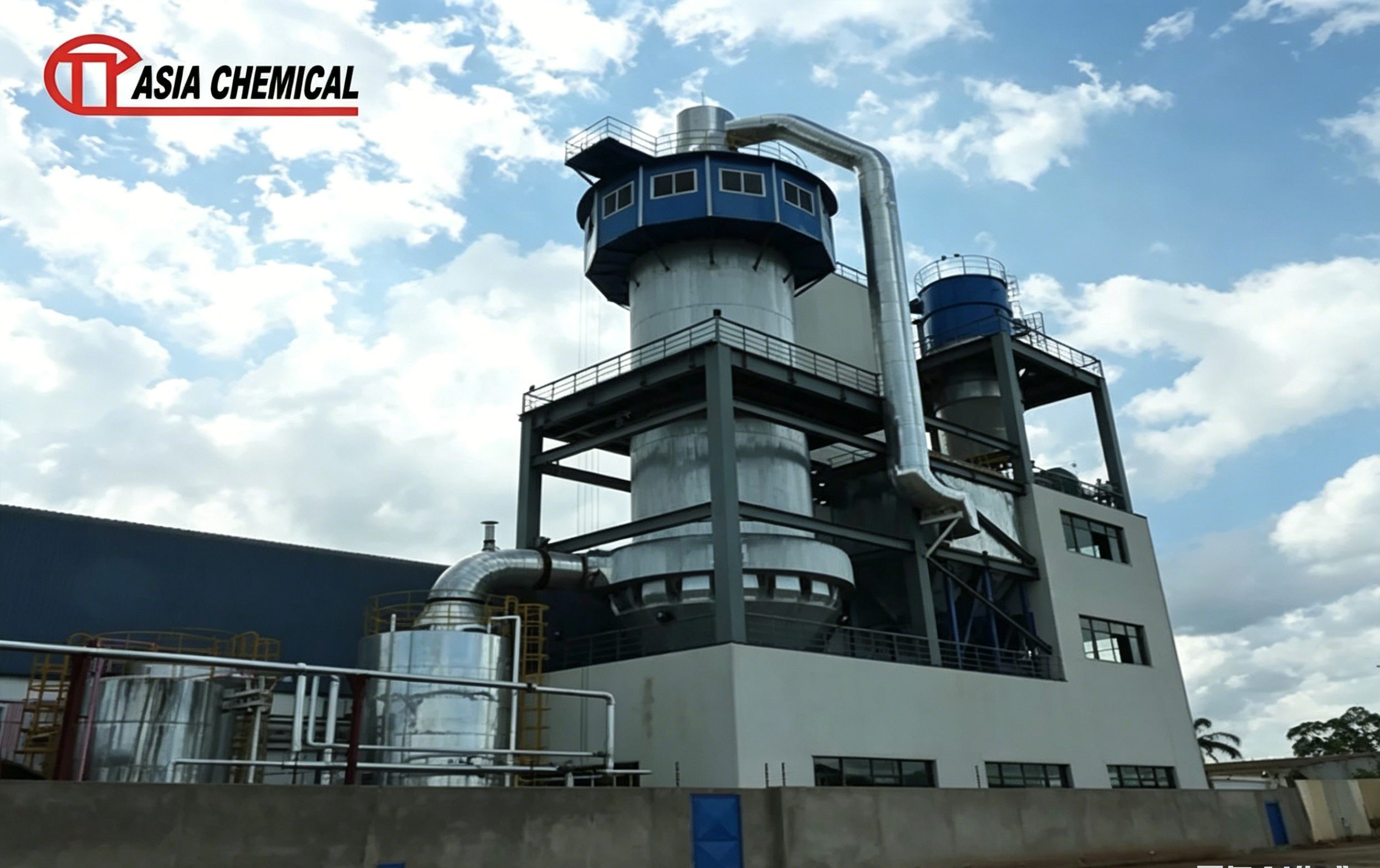
Washing Powder Equipment Production LineModel: many types for choice
Production capacity
: 30t~50t/hr
Introduction:
Asia Chemical Engineering Co., Ltd. is one of the most reliable manufacturers and suppliers of energy savingliquid detergent plant in China. Please rest assured to wholesale cost-efficient energy savingliquid detergent plant from our factory. Good service and reasonable price are available.
Why is dedicated energy-saving equipment needed for laundry detergent production?
The main active ingredients in laundry detergent (such as AES/AESA/LAS) are typically in the form of high-viscosity pastes or greasy substances. Traditional equipment often requires prolonged high-temperature heating to reduce viscosity and promote dissolution when processing these materials, leading to energy waste and the risk of thermal degradation of the active ingredients. Energy-saving equipment, through the combination of a high-shear homogenizing head and anchor/scraper agitation, can rapidly disperse and dissolve materials at medium to low temperatures or even room temperature, realizing the energy-saving potential of a "cold mixing process."
Core Energy-Saving Technologies for Laundry Detergent Production Lines
1. Low-Energy Agitation System for High-Viscosity Materials
The biggest energy consumption point in laundry detergent production lies in overcoming material viscosity. Energy-saving equipment employs a dual agitation system with frequency conversion control:Anchor/Wall-Scraping Agitation: Ensures uniform heat transfer during heating or cooling of high-viscosity laundry detergent, preventing localized overheating and coking, and reducing heat loss.High-Shear Homogenizing Emulsification Head: Specifically designed for rapidly pulverizing micelles in AES (Alternative Emulsions), enabling rapid hydration and dissolution. Compared to traditional long-duration, low-speed agitation, this combination can shorten dissolution time by 30%-50%, directly saving energy.
2. Cold-Formulation Process Support and Heat Recovery
For non-soap-based laundry detergents, many formulations support cold-formulation processes (room temperature production). Energy-saving equipment is equipped with a highly efficient dispersion and emulsification system that can uniformly disperse poorly soluble powders (such as optical brighteners and enzymes) without prolonged steam heating.
Note: For formulas requiring further heating, the equipment employs a multi-layer jacketed heat exchange structure, providing a large heat exchange area and rapid heating. An optional waste heat recovery device can be added to utilize the heat from the cooling water for preheating the next batch.
3. Precise Vacuum Suction and Defoaming System:
Laundry detergent production often generates significant amounts of foam. Traditional processes frequently require the addition of defoamers or system shutdown. The energy-saving equipment features a vacuum suction system where powder or liquid is drawn into the bottom of the reactor under negative pressure, directly contacting the liquid and eliminating dust and foam generation. This not only saves on defoamer costs but also reduces material waste and cleaning frequency due to foam overflow (saving water resources).
4. Automated Formula Control:
The fully automatic PLC system incorporates a laundry detergent formula database. Based on the set production volume, the system automatically calculates and controls the precise addition amounts of components such as water, AES, 6501, and CAB-35, avoiding rework waste caused by manual weighing errors and achieving stable quality and optimal energy consumption for each batch.
Environmental and Cost Advantages in Laundry Detergent Production:
Water Saving: The equipment features a built-in CIP cleaning system. Optimized cleaning balls and programs are designed to address the water-soluble nature of laundry detergent residue, requiring minimal water for thorough cleaning. The cleaning water can be reused as the first stage of dissolving water for the next batch.
Energy Saving: By supporting cold-mixing processes and shortening production cycles, energy consumption is reduced by 20%-40% compared to traditional heating processes. For example, with an annual production of 5,000 tons of laundry detergent, this can save tens to hundreds of thousands of yuan in electricity/steam costs annually.
Low Loss: The closed-loop vacuum feeding system ensures no dripping loss of expensive surfactants (such as AES and APG), achieving near 100% raw material utilization.
Return